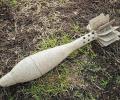
The officials said dozens of unexploded explosives were destroyed by the experts along the Line of Control in Rajouri and Poonch districts and along the International Border in Jammu and Samba which witnessed intense cross-border shelling and drone attacks from May 7 to May 10.


There was a ceasefire violation by Pakistan Army on a forward post in Mankote-Balnoie sector.

A top police officer in Jammu says that the presence of foreign terrorists in the region's dense forests is a major challenge, and that efforts are underway to neutralize them. He also noted the use of technology like drones by terrorists and criminals.

According to officials, 46 deaths have been recorded in terrorism-related violence since January this year in the twin border districts of Rajouri and Poonch and nearby Reasi district.

Over 5,000 people have been evacuated from flooded areas in the Jammu region following heavy rains and flash floods. Rescue and relief operations are underway to restore essential services and provide assistance to those affected.
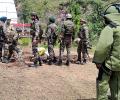
Two Indian Army personnel, including a captain, were killed and another was injured when suspected terrorists set off an improvised explosive device (IED) near the Line of Control (LoC) in the Akhnoor sector of Jammu on Tuesday. This was the third incident of cross-border action by terrorists in the Jammu region in four days, highlighting the ongoing security challenges in the area. The blast occurred while the troops were on patrolling duty near a forward post, underscoring the risks faced by security personnel in the region. Following the incident, the Army launched search operations in the area and expressed condolences for the loss of its personnel.
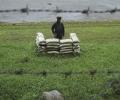
Less than a week after five soldiers were killed in an ambush at the Line of Control in Jammu and Kashmi, Pakistan on Monday violated the bilateral ceasefire in the Poonch sector along the Line of Control, according to a defence spokesperson.

Heavy rains battered Jammu and Kashmir, triggering floods, damaging infrastructure, and disrupting normal life. Authorities issued advisories and rescue operations were conducted.
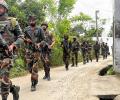
Security forces in the Jammu region are maintaining a strong vigil and conducting operations to track down 40 to 50 terrorists active in the area. Multi-tier security measures, including anti-drone strategies and intensified night operations, are in place.
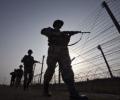
Pakistani troops on Saturday evening violated the ceasefire on the Line of Control at two places in the Mendhar sector of Poonch district of Jammu region.

Indian Army soldiers patrol the Line of Control at Pallanwala in Akhnoor ahead of Independence Day.
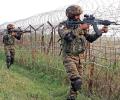
Pakistan troops have violated the ceasefire agreement for the 11th consecutive night, firing on Indian posts along the Line of Control (LoC) in Jammu and Kashmir. The firing began in Kupwara and Baramulla districts and spread to other sectors, including Poonch, Rajouri, Mendhar, Naushera, Sunderbani, and Akhnoor. The Indian Army responded promptly and proportionately. The ceasefire violation comes despite a recent phone call between the Directors General of Military Operations (DGMOs) of India and Pakistan on April 29. This marks the latest escalation of tensions between the two countries, following a terror attack in Pahalgam in April.

As Prime Minister Manmohan Singh and United Progressive Alliance Chairperson Sonia Gandhi are on a visit to Jammu and Kashmir, Pakistani troops on Tuesday violated ceasefire for the fourth time this month by opening firing on Indian posts along the Line of Control in the Poonch district.

On Thursday, April 20, 2023, five soldiers were killed and another was seriously injured after their vehicle caught fire following a terrorist attack in Jammu and Kashmir's Poonch.

Terror outfits in Jammu and Kashmir are now constructing elaborately-designed underground bunkers deep inside thick forests and elevated ridges instead of taking shelter in local houses, officials said. This tactical shift, fuelled by eroding local support, presents a new challenge to the Army and other security forces.

A Defence spokesman said the ultras opened heavy fire on search parties resulting in critical injuries to the JCO and four other personnel.

The Indian Army responded in a measured and effective manner to the provocation.

A fresh exchange of fire took place on Thursday between terrorists and security personnel in Jammu and Kashmir's Rajouri district, where four Army personnel were killed and two others were injured in an encounter, officials said.

Six persons were found dead on the spot and five more succumbed to injuries while being evacuated from the scene.
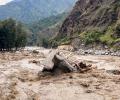
While two bodies were recovered on Wednesday, the death toll climbed to four on Thursday after the recovery of two more bodies from the Indira Priyadarshini Hydroelectric project site in Kangra district.

Indian troops did not retaliate to the 'deliberate provocation' to avoid civilian casualties across the border.

People along the Line of Control and International Border in the Jammu region continue to live under the shadow of death, with unexploded mortar shells fired by Pakistani troops still embedded in farmlands and residential areas even though hostilities have stopped for nearly a week. IMAGE: Kindly note that this image has been posted for representational purposes only. Photograph: / Rediff.com Despite the May 10 understanding between India and Pakistan, locals describe the border areas as a 'death trap'. Sixty-two-year-old Balvinder Singh, who returned to his home in Pargwal sector on May 14, recounted a narrow escape. "Two shells exploded in our compound, damaging our house. Three more landed on our farmland. We were terrified and told our family to stay away from the fields until the Army could help," Singh told PTI. Army engineers later came to the village and safely defused the unexploded shells, bringing a temporary sense of relief. "Fear is writ large on the faces of people to these death traps in border hamlets", he said. Scenes of destruction are evident rooftops torn apart, broken houses, windows punctured by shrapnel, and carcasses of cattle lying in pools of blood. The acrid smell of gunpowder still lingers in the air. Sardar Gurmeet Singh faced a similar ordeal. His family could not re-enter their home as a live mortar shell had sunk into the compound in a village close to the International Border. "The army's bomb disposal squad removed it after four days, allowing us to finally enter, back home," he said. Indian Army engineers have launched a sweeping clearance operation across border districts, defusing over 80 unexploded shells in the past five days -- including 6 in Pargwal, 19 in Rajouri, 42 in Poonch, and 12 along the IB. "These shells, mostly 120 mm calibre, have a range of 15 to 30 km and pose a serious threat to both civilian and military targets," an Army officer said. "Many of them were fired by Pakistan during recent hostilities." On May 7, the Indian Army launched Operation Sindoor, conducting precision strikes on nine terror hubs in Pakistan and Pakistan-occupied Jammu and Kashmir (PoJK) in response to the April 22 terror attack in Pahalgam that killed 26 people, most of them tourists. The subsequent retaliation by Pakistan pushed the region to the brink of war. From 7 to 10 of May, 27 civilians were killed and over 70 injured in Pakistani shelling in the Jammu region. Farid Din Gujjar, a resident near the border, expressed fear about returning to his fields. "Several shells created deep craters in our paddy land. We cannot resume work until all unexploded ordnance is cleared. It's a death trap," he said. Army units, in coordination with Jammu and Kashmir Police, have evacuated high-risk zones and issued stern warnings to residents not to touch any suspicious objects or unexploded shells. In one major operation, 42 live shells were safely destroyed in the Poonch villages of Jhullas, Salotri, Dharati and Salani. "All safety protocols were followed. The shells posed a serious danger to local lives," an Army spokesperson said, calling the effort a 'continued commitment to protect civilians and restore normalcy'. Poonch saw the vast majority of deaths due to shelling. Security officials said that Pakistan used a mix of mortar shells, armed drones, and missiles during the shelling spree, specifically targeting civilian habitations and border towns in Jammu, Samba, Kathua, Rajouri, and Poonch. As clearance operations continue, the border residents are slowly returning to their homes, but with caution, fear, and lingering uncertainty about shelling that may yet happen in the future.

Suspected drones were observed along the International Border in Samba district of Jammu region on Monday, while armed forces downed a 'surveillance drone' in Punjab's Jalandhar district.

Written in Urdu, the posters sought the help of the people in tracing the terrorists, saying "those who killed the innocents do not have a place in our country".

Incessant rains and flooding have caused widespread disruption in northern India, with states like Himachal Pradesh, Delhi, Punjab, and Jammu and Kashmir facing landslides, road closures, and displacement. Rescue efforts are underway as authorities grapple with the aftermath of the deluge.
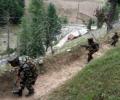
The army early on Thursday foiled an infiltration bid by terrorists on the Line of Control in Poonch district of Jammu region.
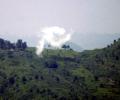
The intense shelling from across the border also prompted the authorities to suspend class work in nearly half a dozen government-run schools falling within the firing range in Poonch district.

The soldiers' families were inconsolable as they waited for them to come home one last time.

A cloudburst in a remote village in Kathua district, Jammu and Kashmir, resulted in four fatalities and six injuries. Rescue operations are underway, and the district administration is monitoring the situation.

They said a sniper is believed to have targeted the truck from the front before the other terrorists sprayed bullets and lobbed grenades on it.
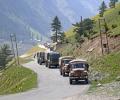
The vehicles came under attack in the Savni area on the Rajouri-Thanamandi-Surankote road around 3.30 pm.
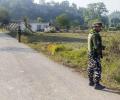
Two terrorists, including a top Lashkar-e-Tayiba (LeT) commander trained in Afghanistan, were killed in a gunfight with security forces on Thursday in Jammu and Kashmir's Rajouri district, officials said.
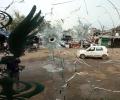
People in several districts of Punjab, Jammu and Kashmir and Gujarat spent an anxious night as authorities enforced blackouts amid heightened tension between India and Pakistan.

A statement from the Army's Northern Command said its personnel have been conducting 'relentless intelligence-based operations to flush out a group of terrorists involved in an ambush on an Army truck in the Tota Gali area of Bhata Dhurian in Jammu region last month'.

Villagers living near the International Border and Line of Control in Jammu are on high alert following the recent terror attack in Pahalgam, preparing underground bunkers and accelerating crop harvesting. The incident has heightened security concerns despite a renewed ceasefire agreement between India and Pakistan in 2021. Residents are demanding swift action against the perpetrators and their handlers.

Violating the ceasefire again, Pakistani troops fired on forward posts along the Line of Control in Poonch district of Jammu and Kashmir.

Pakistani troops again targeted Indian posts along the Line of Control in Poonch district of Jammu and Kashmir, drawing a retaliation from Indian troops.

The Bharatiya Janata Party termed Mufti's temple visit a "political gimmick."
This marked the sixth consecutive night of ceasefire violations by Pakistan along the LoC, amidst heightened tensions between New Delhi and Islamabad following a recent terror attack in Pahalgam on April 22.
